Medically reviewed by Dr. Pritesh Vidhate, BVSc & AH, MVSc (Veterinary Epidemiology & Preventive Medicine) — 24+ years of experience in companion animal and exotic pet medicine.
Ear infections are among the most common — and most uncomfortable — problems we see at Shivraj Pet Clinic, Wakad & Pimple Saudagar, Pune. They're especially frequent in floppy-eared breeds and during Pune's humid monsoon months, when moisture gets trapped in the ear canal and bacteria or yeast multiply rapidly.
Quick Facts
| Species affected | Dogs (all breeds; floppy-eared breeds at higher risk) |
| Severity | Mild to severe — untreated infections can spread to the middle/inner ear |
| Common causes | Bacteria, yeast, ear mites, allergies, trapped moisture |
| Emergency signs | Head tilt, loss of balance, severe pain, swelling of the ear flap |
| Prevention | Keep ears dry, routine cleaning, allergy management |
Why Ear Health Matters
A dog's ear canal is L-shaped and deeper than a human's, which makes it excellent at trapping moisture, wax, and debris. Left unaddressed, infections cause real pain — dogs with ear infections often become irritable or withdrawn simply because the discomfort is constant.
Signs of an Ear Infection
- Head shaking or tilting
- Scratching or pawing at the ear
- Foul odour from the ear canal
- Discharge — brown, yellow, or bloody
- Redness or swelling inside the ear flap
- Sensitivity or pain when the ear is touched
- Rubbing the ear against furniture or the floor
Causes
- Bacteria and yeast — the most common causes, often triggered by excess moisture
- Ear mites — more common in puppies, highly contagious between pets
- Allergies — food or environmental allergies frequently show up first as recurring ear infections
- Excess moisture — from swimming, bathing, or humid weather
- Foreign bodies — grass seeds or debris lodged in the canal
Myth vs Fact
| Myth | Fact |
|---|---|
| A dog's ear infection will clear up on its own | Most ear infections worsen without treatment and can spread deeper into the ear, risking permanent hearing damage |
| Any home oil or remedy is safe to pour into the ear | Unapproved home remedies can worsen infection or cause damage if the eardrum is compromised — always use vet-approved products |
| Only floppy-eared dogs get ear infections | All breeds can be affected; floppy ears simply trap more moisture, increasing risk |
Treatment
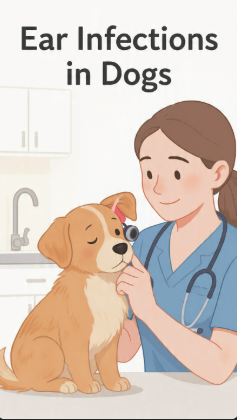
Treatment starts with a proper examination — we use an otoscope to check the eardrum and identify whether the cause is bacterial, yeast, mite-related, or a combination. Based on findings:
- Professional ear cleaning to remove debris and discharge
- Medicated drops targeted to the specific cause (antibiotic, antifungal, or anti-parasitic)
- Oral medication for severe or recurrent infections
- Treatment of the underlying cause — for example, an allergy management plan if infections keep recurring
Prevention
- Dry your dog's ears thoroughly after baths or swimming
- Clean ears weekly with a vet-approved cleaner — never cotton buds deep in the canal
- Check ears regularly if your dog has floppy or hairy ears
- Address allergies early, since recurring infections are often allergy-driven
Frequently Asked Questions
How often should I clean my dog's ears?
Weekly for breeds prone to infections; every 2–3 weeks for others, or as advised after an infection.
Can I use human ear drops on my dog?
No. Always use veterinary-formulated products — human products can be ineffective or harmful.
Why does my dog keep getting the same infection back?
Recurring infections are frequently a sign of an underlying allergy that hasn't been addressed. Ask us about allergy testing.
Is ear infection contagious to other pets?
Bacterial and yeast infections generally aren't contagious, but ear mites are highly contagious between pets.
How long does treatment usually take?
Mild infections often clear in 1–2 weeks with proper treatment; chronic cases can take longer and need ongoing management.
Can I just clean the ear myself instead of visiting the vet?
Cleaning helps with prevention, but an active infection needs a proper diagnosis — treating blind risks masking a worsening problem.
Do certain foods cause ear infections?
Some food allergies (commonly chicken, beef, or dairy) can trigger inflammation that leads to ear infections. See our guide to food allergies in dogs.
What breeds are most at risk in Pune's climate?
Labradors, Cocker Spaniels, Beagles, and other floppy or hairy-eared breeds see the highest rates, especially during monsoon.
If allergies may be contributing, our clinical medicine service can help identify the trigger. Persistent ear infections need veterinary care — early treatment reduces pain and prevents complications.
Book a consultation at Shivraj Pet Clinic, Wakad & Pimple Saudagar, Pune, or call 077569 65169.


